AI pen-test tool fuels massive hacks for $12
Researchers say a Chinese-speaking crew used the Cairn AI pen-test tool to loot hundreds of sites, while another campaign grabbed domain control for $12.

By Felix Hart· Email Vox · 24 Oct 2026

Key facts
- ■Dark Reading: attackers abused Cairn, an AI pen-test tool, to compromise hundreds of sites globally.
- ■A separate Dark Reading report says public models achieved “full domain control” for $12.
- ■Researchers observed an AI-driven campaign targeting 105 websites using open‑weight models.
- ■Brands named among victims include John Deere, SharkNinja, and Cummins, per Dark Reading.
- ■Cheap domain control enables authenticated phishing by rewriting SPF, DKIM, and DMARC records.
- ■A recent takedown disrupted infrastructure behind over a billion malicious emails, showing defensive scale.
Attackers just showed how far AI can stretch a shoestring budget. Researchers say a Chinese‑speaking crew abused an AI pen‑test tool to compromise hundreds of sites, and another campaign used public models to wrest full domain control for “$12.” That’s couch‑cushion money for takeovers that ripple straight into inboxes.
The targets weren’t obscure: Dark Reading names John Deere, SharkNinja, and engine maker Cummins among affected organizations, and counts one AI‑driven wave aiming at 105 sites. For email teams, domain control is the crown: whoever owns DNS can flip SPF, DKIM, and DMARC, turning forged mail into authenticated “from” your brand until you claw back access.
What happened
Dark Reading reports that an attacker speaking Chinese automated a global spree by abusing Cairn, an AI‑assisted penetration testing tool designed for legitimate security work. The campaign compromised hundreds of websites, then looted data from well‑known companies including John Deere, SharkNinja, and Cummins, indicating the targets had real commercial gravity.
In a separate finding highlighted by Dark Reading, researchers documented a campaign where public AI models—no private weights required—were tasked with steps that led to “full domain control” for just $12 in compute or cloud tooling. That dollar figure underscores how commoditized the attack chain has become when models can plan and execute routine tasks.
Another campaign cited by Dark Reading targeted 105 websites by directing open‑weight models to handle reconnaissance, vulnerability chaining, and exploitation. At that scale, even a modest success rate yields dozens of footholds that can be parlayed into credential theft, code execution, or DNS changes that later surface as authenticated phishing.
Dark Reading’s synthesis is blunt: cyber‑defense will have to change because AI collapses the cost and expertise barriers that used to limit mass exploitation. When an LLM can stitch together public advisories, GitHub proof‑of‑concepts, and cloud APIs, the bottleneck shifts from human labor to cloud credits.
The Cairn abuse shows attackers don’t need to build bespoke agents when they can redirect pen‑test automations. Turning a red‑team helper into an intrusion engine gives adversaries scheduling, reporting, and modular exploit execution without writing orchestration code from scratch.
For email ecosystems, DNS tampering sits one hop away from inbox impact. With registrar access or a live web foothold that escalates to control of a domain, attackers can publish their own SPF includes, add DKIM selectors pointing to their keys, and set DMARC to relaxed alignment to boost deliverability.
The trust cascade extends beyond DNS. Compromised websites often host phishing kits or payloads on legitimate subdomains, which makes URL‑based filtering less effective. It also burns a sender’s domain reputation when those links show up in marketing or transactional mail and start attracting user complaints.
We’ve seen the cloud side of this before. A recent coalition disrupted infrastructure linked to over a billion malicious messages, and investigators showed how phishing services leaned on legitimate cloud accounts to scale delivery and link hosting, as Email Vox reported in our piece on the phishing infrastructure takedown.
AI is also reshaping the inbox itself. Attackers have started hiding instructions inside emails to steer AI assistants—so‑called prompt injection—pushing automated tools to exfiltrate data or click malicious links, as we covered in phish baiting your AI email assistant. That compounds risk when the same models help run the attack.
Cloud identity remains a soft target when a beachhead is won. In October, a single compromised credential let unknown actors pivot into 173 Microsoft 365 tenants via a third‑party backup tool, forcing a provider to suspend its cloud backup service, according to our coverage of the ConnectWise Cloud Backup incident. AI‑driven recon only accelerates that kind of pivot pathfinding.
Even email gateways can become stepping stones. Cisco recently patched CVE‑2026‑76519 after detecting active exploitation in its secure email gateway attachment scanner, a reminder that edge tools are targets too—and can be roped into wider campaigns when flaws ship, as we detailed in Cisco’s email gateway zero‑day.
The low cost changes defenders’ math. If an attacker can launch 100 site probes for $12, defenders must assume parallel attempts against web apps, identity providers, and DNS interfaces. That means shifting spend toward continuous monitoring and rapid containment rather than relying on one‑time audits.
Open‑weight models introduce attribution wrinkles. When anyone can run an LLM locally or in low‑cost clouds, blocking by provider or API key loses bite. Defenders will need behavior‑based detections that spot automated recon and exploitation patterns—not just IP ranges linked to AI vendors.
Cheap domain control also complicates brand protection programs that depend on DMARC aggregate (RUA) reporting to spot spoofing campaigns. If the attacker changes the reporting address in the DMARC record, visibility evaporates until the rightful owner regains DNS control.
While DMARC enforcement remains table stakes, it’s not a cure‑all for compromised domains. Stripe’s move to require DMARC for custom sender domains shows the market is tightening controls, but if an adversary edits your DNS, they can meet policy requirements under your name until the registrar lockout ends.
Insurers are taking notice of basic email hygiene. Underwriters now ask for SPF, DKIM, and DMARC as part of cyber policies, and some policies contemplate higher deductibles when controls are missing, as we’ve reported. That pressure aligns with the need to lock down DNS against AI‑assisted smash‑and‑grab attempts.
The Cairn incident also spotlights tool governance. Security teams that allow autonomous or semi‑autonomous pen‑test agents in production need strict rules on data handling, target lists, and execution guards—because those guardrails are exactly what attackers try to remove when they repurpose the same tools.
Finally, remediation speed becomes the differentiator. The window between a web foothold and email abuse can be hours, not days. Teams that can rotate DKIM keys quickly, force OAuth reconsent across email platforms, and verify DMARC report flows have a better shot at blunting damage before recipients see forged but authenticated mail.
The background
Cairn appears in Dark Reading’s reporting as an AI‑enabled penetration testing assistant—legitimate software whose automation was turned toward intrusion at scale. The Chinese‑speaking attacker’s use of an existing tool avoided the need to write custom agents.
Dark Reading’s companion report sets the context for cost: public models and open‑weight systems can run the blocking and tackling of recon, exploit chaining, and light scripting with minimal spend. The cited “$12” for domain control suggests commodity clouds and public code repositories are doing heavy lifting.
Mass targeting—105 websites in one AI‑driven wave—illustrates that attackers are comfortable trading precision for scale when unit costs drop. That tradeoff matches a broader shift investigators have chronicled in phishing‑as‑a‑service operations that rent access to cloud mailers and link hosts.
Open‑weight models don’t rely on vendor APIs, which blunts defenders’ usual options to revoke keys or block known AI IPs. It also lowers barriers for actors operating from regions where commercial access to US‑hosted AI APIs may be limited.
Cheap automation collides with email because domain ownership is the root of sender identity. SPF (Sender Policy Framework) lists permitted sending hosts. DKIM (DomainKeys Identified Mail) signs content with domain‑controlled keys. DMARC (Domain‑based Message Authentication, Reporting and Conformance) tells receivers how to handle failures. DNS control rewrites all three.
Supply‑chain turbulence adds fuel. Recent incidents, like a malicious release of a popular AI library and exploits against email infrastructure components, show attackers mix techniques—package poisoning for access, then AI for speed—before pivoting to abuse trust signals in messages.
What people are saying
Dark Reading’s topline is that defenses must change because AI slashes attacker costs and time. One researcher summarized the new reality: public models delivered “full domain control” for $12—an efficiency that would have been implausible with manual labor alone.
Email security vendors have been repositioning accordingly. Proofpoint recently argued for intent‑aware defenses that correlate email, browser, and endpoint signals, a stance that assumes attackers will blend vectors rather than stick to one inbox trick.
Anti‑abuse groups stress infrastructure disruption. The billion‑message takedown we covered showed value in targeting cloud accounts and automation backends, not just phishing sites. That echoes the need to watch registrars, OAuth grants, and DNS monitors alongside traditional mail filters.
Risk managers, including cyber insurers, are reinforcing authentication baselines. Asking for SPF, DKIM, and DMARC on renewal nudges organizations to enforce—and verify reporting—so domain anomalies get noticed faster when attackers touch DNS.
What happens next
Expect more dual‑use AI tooling pressure. As red‑team automations gain features, attackers will borrow them. Tool maintainers may add stricter safeguards, but forks and open weights will dilute central control.
Defenders are likely to invest in continuous DNS change detection, DKIM key rotation playbooks, and registrar‑level locks that require out‑of‑band checks. Those controls directly blunt the path from a $12 exploit chain to authenticated brand abuse in email.
Mailbox providers and security platforms will lean harder on behavioral models—spotting sudden surges in sends from new IPs, mismatched link and visible domains, and impossible‑travel logins—because static blocklists lag when attackers host on freshly compromised sites.
AI in the inbox will get guardrails. Enterprises experimenting with autonomous email assistants will narrow permissions, disable irreversible actions, and add policy layers to prevent prompt‑driven mishaps when malicious content arrives dressed as routine mail.
Senders who practice for a domain hijack—rehearsing contact with registrars, revoking OAuth tokens, reissuing selectors, and validating DMARC reporting addresses—will shrink outage windows. In an era of $12 takeovers, the fastest playbook wins.
The Email Vox take
-
Treat DNS as Tier‑0. Put your registrar behind phishing‑resistant MFA, lock transfers, enable WHOIS privacy where allowed, and set registry locks for core domains. Add continuous DNS monitoring that alerts on SPF, DKIM, and DMARC changes within minutes.
-
Assume inbox abuse after any web foothold. If your site or subdomain is touched, move fast: rotate API keys, revoke OAuth grants, reissue DKIM selectors, and enforce DMARC p=reject. Use out‑of‑band channels to validate vendor DNS updates. Instrument for sudden shifts in bounce codes, complaint rates, and sending IPs.
-
Harden humans and helpers. Train for AI‑baited email tricks and disable autonomous actions in AI inbox tools by default. Adopt least‑privilege OAuth scopes for marketing platforms and audit them quarterly.
Frequently asked questions
- what is cairn and how was it abused?
- Cairn is an AI-assisted penetration testing tool. Dark Reading reports a Chinese-speaking attacker used it to automate compromises across hundreds of websites globally.
- how cheap did attackers get domain control with ai?
- Dark Reading says one campaign used public AI models to gain “full domain control” for just $12 in cloud costs.
- how big was the multi-site ai attack campaign?
- Researchers cited by Dark Reading observed a single AI-driven campaign targeting 105 websites using open‑weight models.
- which brands were hit in the cairn-driven spree?
- Dark Reading names John Deere, SharkNinja, and engine maker Cummins among affected organizations.
- why does this matter for email security?
- Cheap domain control can lead to brand‑spoofing emails, account takeovers, and harder‑to‑spot phishing from legitimate infrastructure.
- are defenders doing anything about ai-powered phishing infrastructure?
- A coalition recently disrupted infrastructure behind over a billion malicious messages, according to Email Vox’s report on a major phishing takedown.
- does dmarc help if attackers seize a domain?
- DMARC helps when attackers spoof your domain, but if they control DNS or hosting, they can set their own SPF, DKIM, and DMARC until you regain control.
- what should senders change right now?
- Lock down registrar/MFA, monitor DNS for unauthorized changes, enforce DMARC, and watch for unusual email patterns tied to domain or web compromises.
Why this matters
Email abuse follows the infrastructure. If attackers can cheaply seize domains or automate mass exploitation with AI, they can mint convincing messages with working authentication and trusted links. That blurs traditional sender-reputation signals and shrinks response time. Email teams that treat DNS, OAuth grants, and cloud apps as first‑class assets—monitored and locked down like production code—will be better placed to spot hijacks before they hit inboxes at scale.
Sources
Reporting draws on the public sources listed above. Spotted an error? Request a correction.
Related coverage

Cyber insurers are now asking for DMARC receipts
Insurers now expect SPF, DKIM, and DMARC—while EU rules push the same controls. Here’s how underwriting shifted, what it asks in 2026, and why enforcement helps.
20 Oct 2026

Lock down your email in 30 days, no drama
A 30‑day security-and-deliverability tune‑up built from fall 2026 headlines: MFA‑bypass phish, AI‑baited inbox tools, Gmail’s vanished colors, and sharper blocklists.
18 Oct 2026
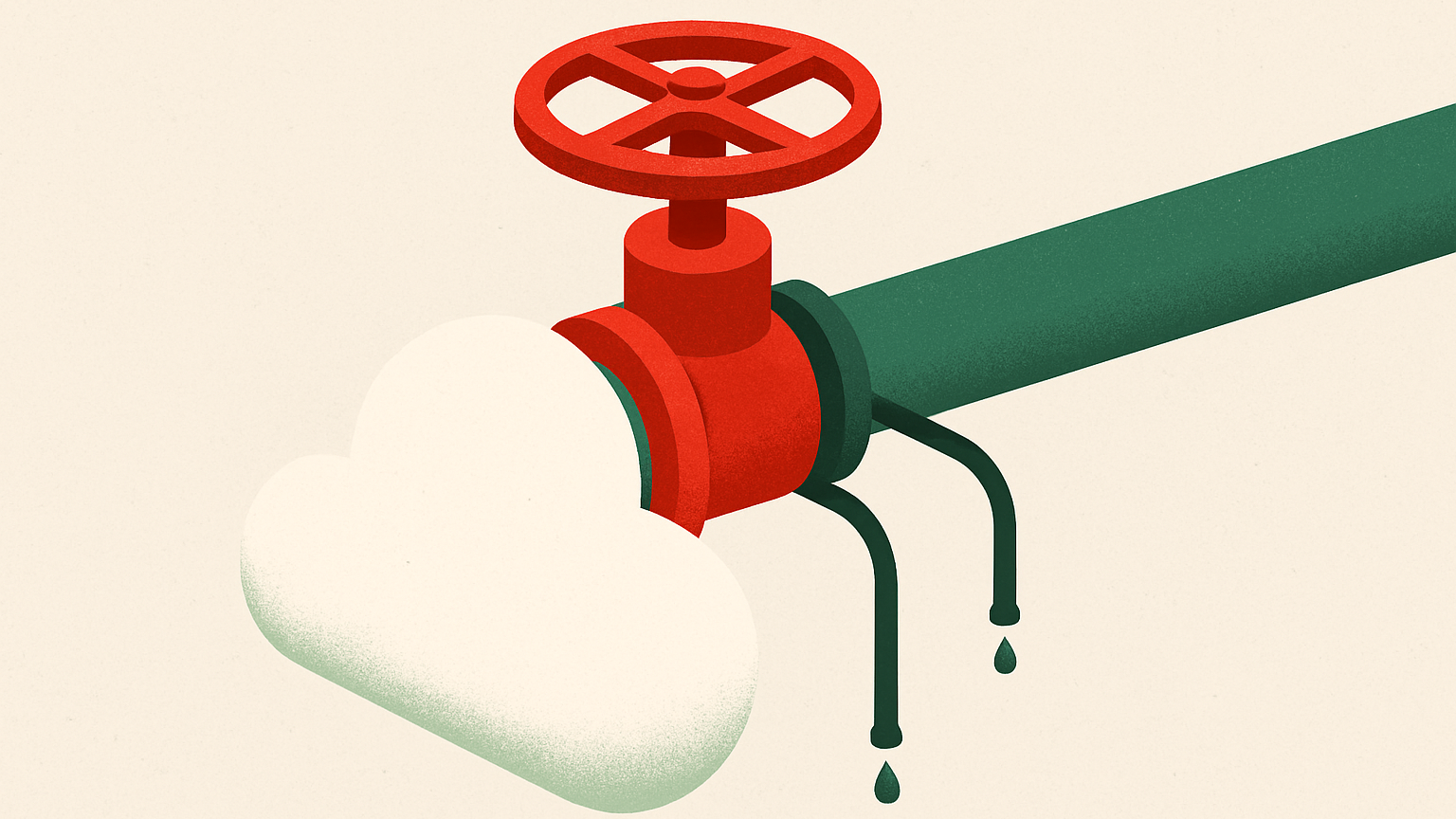
Phishing takedown targets the cloud accounts behind the scams
A coalition disrupted infrastructure linked to more than a billion malicious messages, exposing how phishing services turn legitimate cloud tools into attack machinery.
9 Oct 2026

Phish are now baiting your AI email assistant
Attackers are slipping hidden instructions into emails to steer AI assistants. Here’s how the trick works—and what to lock down before it bites.
15 Oct 2026

Germany’s DMARC push stalls: more reject, errors persist
A new review says 40% of Germany’s biggest domains now block spoofs at p=reject—but a third still fumble SPF or DMARC config.
19 Oct 2026
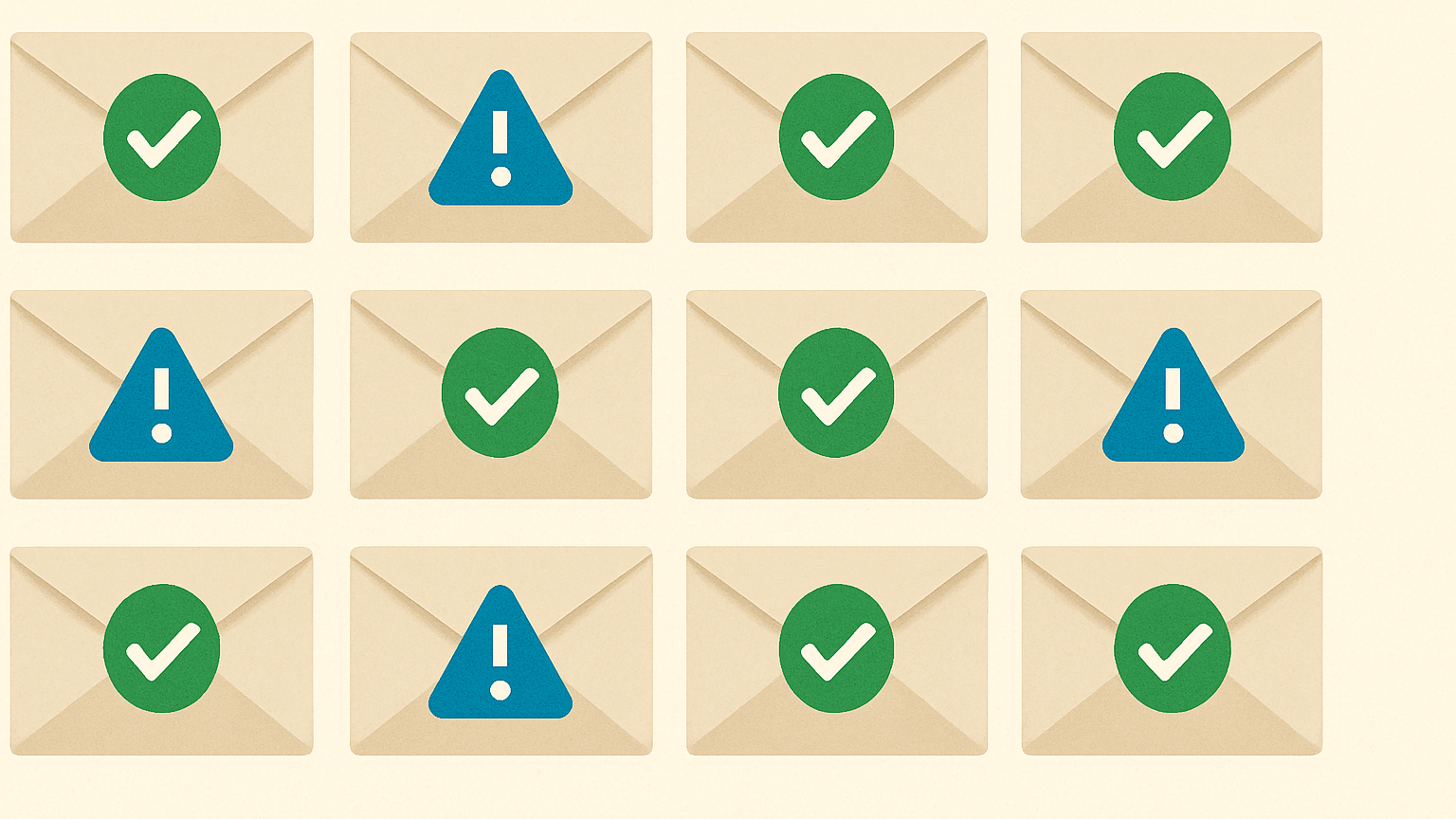
Stripe makes DMARC table stakes for custom sender domains
Stripe makes DMARC non‑optional for custom sender domains—and will fall back to stripe.com if your DNS slips. Here’s what that changes for billing mail.
20 Oct 2026