AI-made login clones now grab MFA and sessions, too
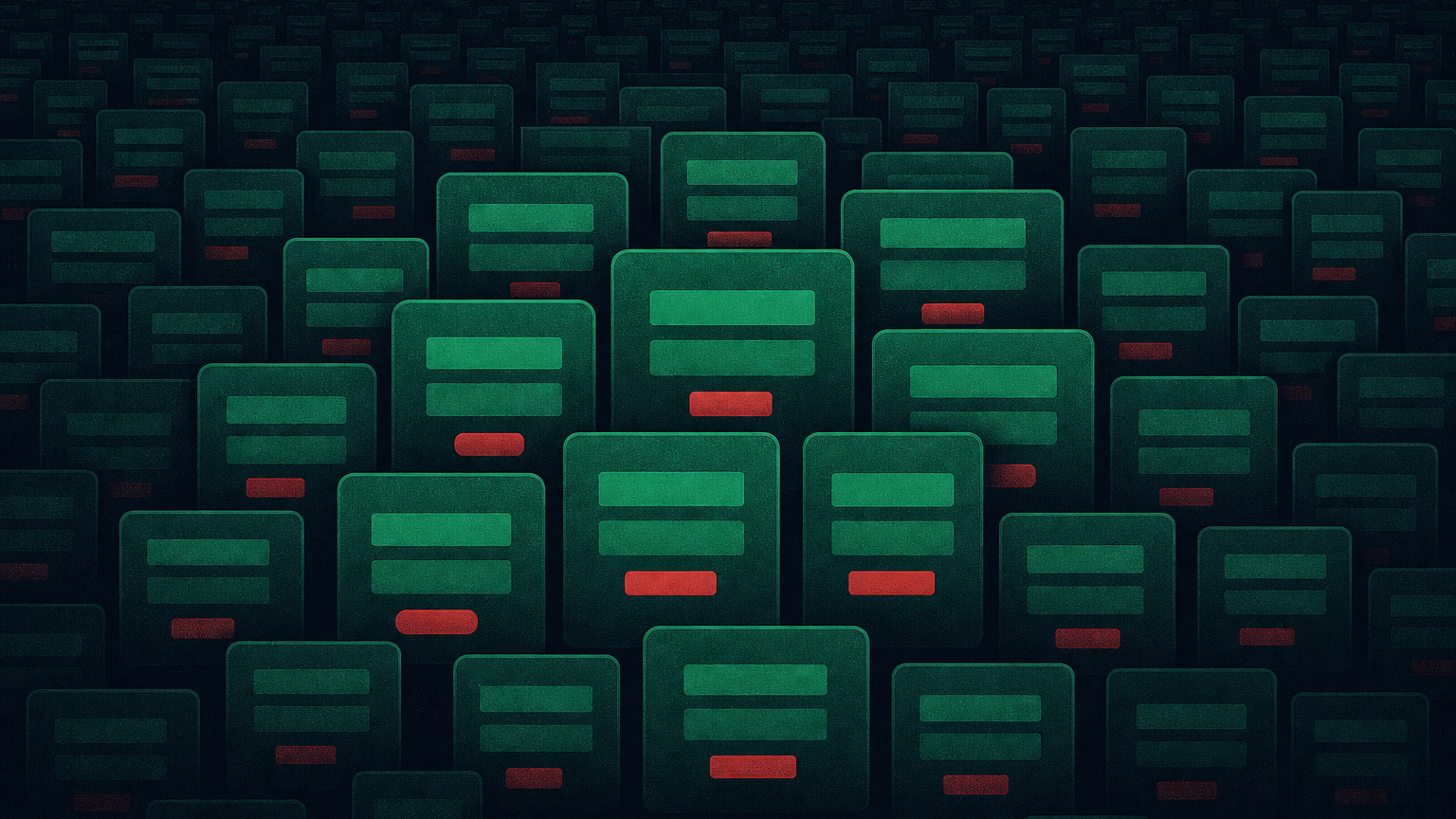
Criminals are cloning sign-in screens so well they can grab MFA and sessions, not just passwords.

By Felix Hart· Email Vox · 28 Oct 2026
Key facts
- ■Generative AI is helping attackers clone convincing login pages, the report says.
- ■Some fake pages now capture MFA codes or hijack authenticated sessions.
- ■These clones impersonate trusted brands and target specific employees or organizations.
- ■Email is a common delivery channel for lures that point to the cloned pages.
- ■The tactic raises account takeover risk by turning stolen access into wider reach.
Criminals didn’t invent fake login pages this year. But a new report says generative AI is making them faster to build and harder to spot—and now some of those pages can capture multi-factor authentication (MFA) codes or even hijack a live session.
The piece explains that attackers are recreating familiar sign-in screens with uncanny accuracy, impersonating trusted brands and services that employees use every day. That realism ups the click-through rate—and the odds that victims will type in real passwords.
What happened
According to the report, generative AI lets attackers clone the visual and interactive details of legitimate login pages quickly. That includes layouts, color schemes, button styles, and copy that closely matches a brand’s tone.
The same write-up says these pages aren’t limited to capturing usernames and passwords. Some are built to intercept time-based MFA codes or to seize an already authenticated session, enabling account takeover without re-prompting users.
Attackers are also tailoring these pages to specific organizations and even to individual employees, the article notes. That targeting makes a generic phish feel like a relevant internal prompt or a routine sign-in challenge.
The report frames this as an evolution of long-running phishing tactics rather than a wholly new threat. What’s changed is how convincingly and cheaply criminals can now spoof “trusted” login experiences using generative tools.
The coverage points out that once credentials or sessions are stolen, attackers can reach far beyond a single app. Email, cloud storage, and internal tools are all within reach if the compromised account has access.
These AI-made copies take advantage of trust built around everyday services, the article says. When the login looks right and the language feels familiar, users are more likely to proceed without verifying the destination.
The piece emphasizes that email is a frequent delivery channel for these lures. That’s because messages are a natural way to present an urgent sign-in link that directs victims to the cloned page.
The article also underscores that session hijacking sidesteps some MFA defenses. If an attacker can piggyback an authenticated session, the victim’s second factor may not block access to the account.
The write-up cautions that brand impersonation lowers friction for the attacker. A convincing logo and “house style” can be enough to quiet a user’s suspicion long enough to harvest secrets.
The report notes that these clones can simulate error states or re-prompts to coax multiple entries from the user. That pattern gives the attacker redundancy: if the first credential fails, a second or third attempt might succeed.
The piece says tailoring can extend to internal jargon and role-specific messaging. That detail helps explain why targeted employees might treat the page as a normal part of their workflow.
The article makes clear that these tactics aim at speed. If an attacker can get a working password or session fast, they can move laterally before the victim notices or resets access.
The report highlights that familiar mobile layouts can be replicated too. Smaller screens tighten the visual space, giving a convincing fake even more cover to pass as real.
The write-up stresses that the technical bar to create a polished clone has dropped. With generative tools, attackers can iterate designs and copy rapidly until the result looks right.
The article underlines that once an attacker lands inside an account, the risk expands. Inbox rules, data exfiltration, and impersonation from the victim’s address are all on the table.
The piece also mentions that capturing MFA codes is part of the playbook for some of these pages. By prompting the user for a code and relaying it quickly, attackers can ride through protections meant to stop password-only theft.
Finally, the report frames this as a shift in realism, not a brand-new category of scam. The core mechanism—fake login page, stolen access—has decades of history; generative AI just sharpens the edges.
The background
The article situates AI-generated login clones as an update to credential phishing, which has long relied on imitating well-known brands to lure users onto lookalike sites.
It explains that generative models can produce convincing visual assets and text that match a brand’s voice, helping attackers sidestep the telltale awkward phrasing that used to give fakes away.
The write-up also points out that these tools speed up targeting, allowing adversaries to personalize pages for a specific organization or team, increasing the chances of a successful harvest.
It adds that some clones are designed to handle multi-step flows, like MFA prompts, capturing additional values in real time to complete the attacker’s sign-in attempt.
The article further notes that session hijacking—piggybacking on an authenticated state—turns a successful phish into a wider breach, because stolen sessions can unlock connected apps.
For readers tracking email security trends, this aligns with the steady refinement of phishing kits into turnkey services. Our earlier coverage of adversary-in-the-middle kit techniques explored how web relays can intercept codes; today’s report emphasizes the AI-driven polish on the front-end page.
If you’re catching up on broader email risk, our security hub pulls together ongoing coverage, including explainers and practical checks for teams tightening login workflows.
What people are saying
The report’s throughline is straightforward: “fake login pages are nothing new,” but generative AI makes them easier to build and more convincing to victims.
It also states that attackers are using these clones to impersonate trusted brands and to tailor phishing to particular employees or organizations, lifting success rates.
Crucially, the article says some fake pages “go beyond stealing passwords,” capturing MFA codes or hijacking authenticated sessions—two routes that blunt basic defenses against account takeover.
Within that framing, the message to defenders is implicit: visual checks and gut feel are no longer reliable, because AI can reproduce the look and tone that humans lean on to judge legitimacy.
What happens next
Per the report, expect more realistic phishing pages to spread because the tools are accessible and efficient. That means more users will face clones that feel routine and familiar.
Organizations should anticipate targeted lures that borrow internal language and role-specific prompts, because AI lowers the cost to produce credible variations at scale.
Security teams can plan for more attempts to capture MFA or ride live sessions, because those techniques give attackers a faster path to an inbox and beyond.
Given the focus on brand impersonation, defenders should assume their organization’s public-facing login flows will be copied. Auditing what’s exposed can reduce the room for convincing fakes.
Email remains a primary delivery mechanism for these attacks, so awareness programs and link-handling policies need to reflect the realism described in the report, not yesterday’s broken-English phish.
Finally, the article’s bottom line is that account takeover risk is rising as clones improve. The faster teams adapt verification habits and guardrails, the less room attackers have to cash in.
The Email Vox take
-
Assume every sign-in link is suspect. Route users to known-good bookmarks or your SSO portal domain, not links in unsolicited messages—even when they look perfect.
-
Shrink the phishable surface. Use phishing-resistant MFA methods where possible, and make sure high-value tools don’t rely on a single login flow that’s easy to imitate in a browser.
-
Kill the stale pages. Audit public-facing login touchpoints and retire or redirect legacy screens that attackers love to mimic. The fewer versions exist, the less there is to clone.
Frequently asked questions
- what are ai-generated fake login pages?
- They are spoofed sign-in screens built with generative AI that closely mimic real brand login pages to steal credentials, according to the cited report.
- how do these pages steal more than passwords?
- Some capture multi-factor authentication (MFA) codes or hijack active sessions, enabling attackers to take over accounts even if a password alone isn’t enough.
- why are these phish harder to spot now?
- Generative AI can quickly recreate familiar layouts, logos, and wording, producing convincing clones tailored to a company or even specific employees.
- who are attackers impersonating with this tactic?
- They impersonate trusted brands and enterprise services by cloning recognizable login experiences, per the reporting.
- do attackers target specific people or just anyone?
- Both. The report says generative AI helps tailor phishing to particular employees or organizations to raise the odds of a successful credential grab.
- what happens after i enter details on a fake page?
- Credentials can be stolen immediately, and some pages can also intercept MFA codes or seize authenticated sessions for account takeover.
- is this only about email accounts?
- No. The same tactic can target any sign-in page that users trust, though email accounts remain a prime target for broader access.
- can training alone stop these?
- Training helps, but the report’s key point is that AI makes fakes more realistic, so technical controls and vigilant verification still matter.
Why this matters
Why this matters: Email is the front door to most work and personal accounts. If a convincing AI-made login page can lift passwords, grab MFA codes, or hijack a live session, attackers can sprint from one inbox to cloud apps and internal tools. That’s not a theoretical risk—it’s the direct outcome the report highlights. For senders and security teams, the takeaway is simple: stop assuming “that page looks right” is any defense. Verification habits and technical guardrails now have to do the heavy lifting.
Sources
Reporting draws on the public sources listed above. Spotted an error? Request a correction.
Related coverage
Phish are now baiting your AI email assistant
Attackers are slipping hidden instructions into emails to steer AI assistants. Here’s how the trick works—and what to lock down before it bites.
15 Oct 2026
AI is sweet‑talking help desks past MFA
Attackers are skipping malware and just calling the help desk. AI is making their pretexts smoother. The weak spot isn’t your endpoint. It’s your process.
26 Oct 2026
Proofpoint wants email defenses to read intent, not just signals
Announced at Protect 2026, Agentic Collaboration Security will connect email, inbox and browser defenses. The rollout is planned for Q1 2027.
14 Oct 2026
Cyber insurers are now asking for DMARC receipts
Insurers now expect SPF, DKIM, and DMARC—while EU rules push the same controls. Here’s how underwriting shifted, what it asks in 2026, and why enforcement helps.
20 Oct 2026

Lock down your email in 30 days, no drama
A 30‑day security-and-deliverability tune‑up built from fall 2026 headlines: MFA‑bypass phish, AI‑baited inbox tools, Gmail’s vanished colors, and sharper blocklists.
18 Oct 2026
AI pen-test tool fuels massive hacks for $12
Researchers say a Chinese-speaking crew used the Cairn AI pen-test tool to loot hundreds of sites, while another campaign grabbed domain control for $12.
24 Oct 2026