Huntress: Microsoft 365 token replay hit 79 orgs
Huntress tracked an AitM token‑replay spree from mid‑July to late September that slipped into dozens of Microsoft 365 tenants without re‑prompting MFA.

By Felix Hart· Email Vox · 27 Oct 2026
Key facts
- ■Huntress reports a Microsoft 365 AitM token‑replay campaign active from July 14 to Sept. 22, 2026.
- ■The campaign logged 497 successful sign‑ins tied to replayed tokens, per Huntress.
- ■A total of 97 accounts at 79 organizations were compromised, The Hacker News reports.
- ■Attackers captured sign‑in sessions via an AitM relay, then replayed tokens to access email.
- ■Email inboxes were a key target once Microsoft 365 access was obtained, according to Huntress.
Timeline
- July 14, 2026Huntress observes token‑replay sign‑ins against Microsoft 365 tenants
- September 22, 2026Campaign activity window ends per Huntress telemetry
- Oct 2026Public disclosure reported by The Hacker News
Attackers didn’t need to break passwords to slip into Microsoft 365. They just re‑used what victims had already earned: valid session tokens.
Cyber firm Huntress says it watched an adversary‑in‑the‑middle (AitM) campaign replay stolen Microsoft 365 tokens to log 497 successful sign‑ins, ultimately compromising 97 accounts across 79 organizations between July 14 and September 22, 2026, according to The Hacker News.
What happened
Huntress attributes the intrusions to an AitM relay that captured sign‑in sessions and then replayed those tokens to impersonate users inside Microsoft 365, The Hacker News reports. The endgame included breaking into targeted email accounts, where access typically unlocks high‑value threads and sensitive attachments.
The telemetry window Huntress cites—July 14 through September 22, 2026—frames the campaign’s active phase. Within that period, Huntress counted 497 successful sign‑ins tied to replayed tokens, a number that doesn’t just tally attempts but sessions that actually cleared Microsoft 365’s checks.
The scope Huntress lists is concrete: 97 individual accounts at 79 separate organizations. That split matters, because it hints at broad targeting with modest depth per tenant rather than a single deep breach, shifting the response from a one‑off cleanup to many small, urgent hunts.
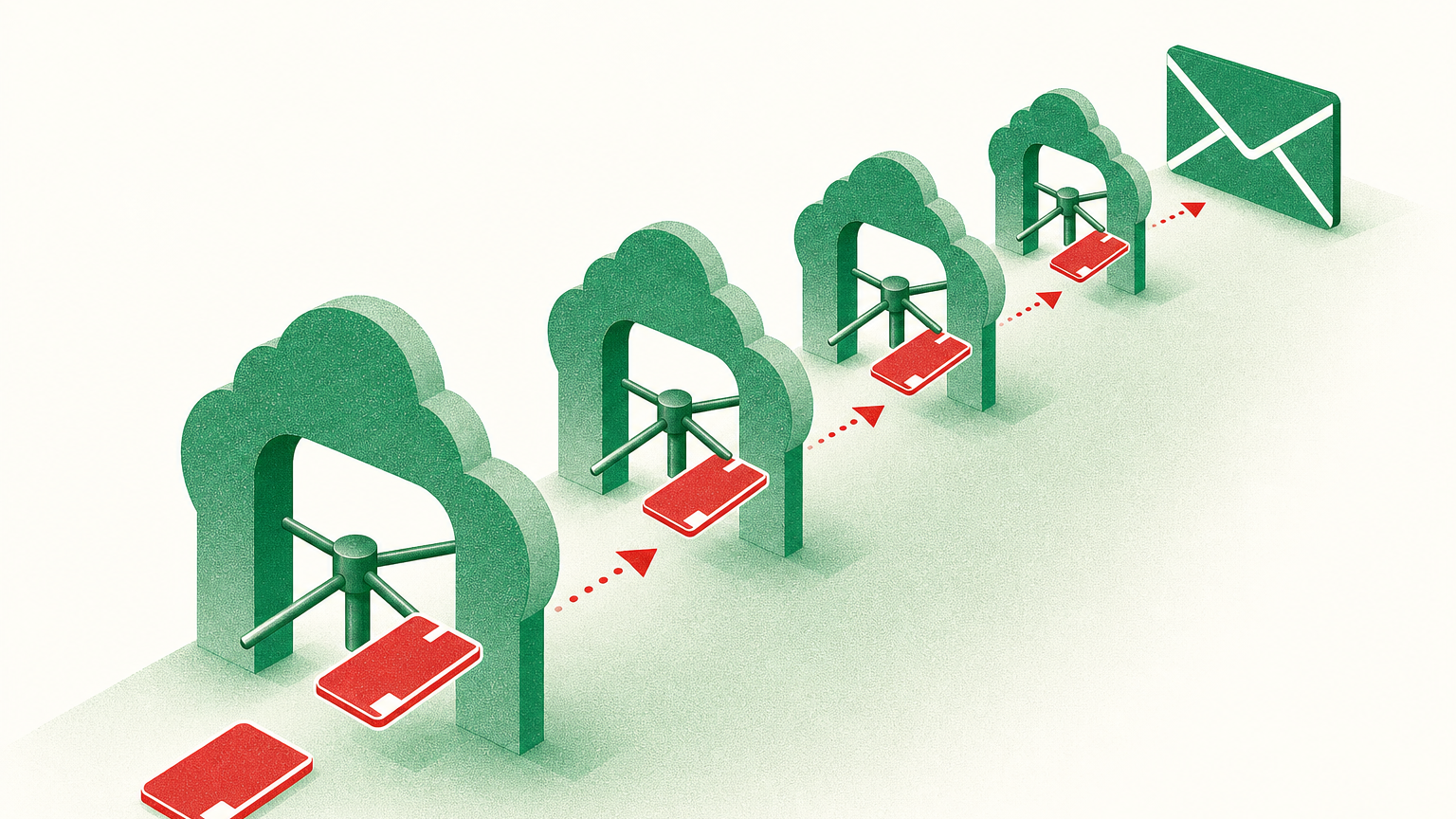
Token replay changes the usual login story. Instead of stealing a password, the attacker pockets a valid session cookie or access token mid‑flow and reuses it, skipping the fresh MFA challenge a normal login would have triggered. Huntress’s findings show that this approach was enough to pass Microsoft 365’s gate for hundreds of sessions.
Email access has outsized leverage inside 365. With a mail account, attackers can rifle through invoices, pull down attachments, and reset access to other apps that trust that mailbox. Huntress’s report to The Hacker News makes clear the prize in this campaign was inboxes, not just identity trophies.
The AitM relay piece describes how the theft worked. A relay sits between the user and Microsoft, luring the user to a phishing page that proxies the real login. The attacker harvests the token issued to the real session, then replays it elsewhere. Huntress’s numbers show that tactic paid off repeatedly in mid‑2026.
The background
Microsoft 365 tokens exist to smooth user experience: they let you skip fresh logins for email and other apps once you’ve proved who you are. That convenience becomes risk when a token isn’t tightly bound to a device or context and can be replayed from somewhere else.
Adversary‑in‑the‑middle phishing has been hammering MFA for years by proxying real login flows, then stealing what comes after. We’ve covered similar playbooks aimed at Google accounts in our report on AitM kits stealing Google MFA, which showed how convincing invites fuel successful relays.
Campaigns that replay tokens can multiply their damage without tripping obvious alarms. There may be no password failure and no new MFA prompt—just a quiet, valid‑looking session. Huntress’s 497 successful sign‑ins highlight how replay can turn a single phish into many authenticated entries.
The 79‑organization spread echoes the “many tenants, light touch” pattern we saw when a compromised credential let actors touch 173 Microsoft 365 tenants in our coverage of ConnectWise Cloud Backup fallout. The through line: attackers favor breadth when credentials or tokens scale easily.
Threat crews have also blended automation to push broader, faster hits. Microsoft recently tied a China‑linked group to automated runs at thousands of tenants via ConnectWise, as we covered in Microsoft naming Storm‑0940’s AI‑assisted hits. Automation plus replayable tokens shortens the gap between first phish and inbox access.
For defenders, token theft shifts the focus from just login enforcement to session governance. Controls that bind tokens to device posture, network location, or real‑time risk can make a replayed token less portable—and less valuable to an attacker who isn’t on the original path.
What people are saying
Huntress told The Hacker News it saw 497 successful Microsoft 365 sign‑in events attributable to the campaign, a count that maps to real access rather than blocked attempts. That detail underscores how AitM token replay can look indistinguishable from legitimate user behavior.
The firm also tied the campaign to 97 compromised accounts spanning 79 organizations, numbers that suggest a targeted but distributed approach. Those figures push incident responders to check for lateral movement inside each affected tenant while also coordinating a cross‑tenant picture of the indicators.
Security teams we’ve spoken with in prior, similar incidents prioritize purging tokens and forcing re‑authentication across suspected accounts. While password resets matter, token invalidation is the step that actually cuts off a replay attacker mid‑session.
Vendors have been tuning detection for these telltale signs: clustered successful sign‑ins, repeated user agents, and geography hops that don’t come with fresh MFA prompts. We’ve noted this shift toward intent and behavior analysis in our look at Proofpoint’s “intent” push, where signals around what an actor tries to do can outweigh clean login telemetry.
Help desks and manual processes can also be unwitting on‑ramps when a token thief wants persistence. We recently showed how AI‑smoothed social calls can pierce MFA, reminding teams that policy exceptions and human‑verified resets need the same rigor as automated login gates.
What happens next
If your tenant overlaps the July 14–September 22, 2026 window, start with scoping. Pull sign‑in logs for those dates, highlight successful sessions from new locations, and trace mailbox activity during and after those sign‑ins for sensitive access.
Next, kill any stolen leverage. Revoke refresh tokens for accounts with suspicious sessions, sign out of all locations, and force re‑authentication. A replay attack lives on borrowed time; taking away token validity ends it.
Then, raise the bar for portability. Tighten conditional access to bind sessions to device compliance and known networks, and turn on risk‑based controls that challenge unusual sign‑ins even when a token looks valid.
Finally, rehearse the playbook. Build detections for clusters of successful sign‑ins without corresponding MFA prompts, and pre‑stage a response that pairs token revocation with mailbox forensics. Put that runbook where your on‑call can grab it—in the same place you track other security coverage in Email Vox’s hub.
The Email Vox take
-
Rotate secrets and revoke sessions fast. If your tenant overlaps July 14–Sept. 22, 2026, force re‑auth and invalidate refresh tokens across impacted users. Pair that with fresh conditional‑access baselines.
-
Bind tokens to context. Enforce device compliance, network constraints, and sign‑in risk. Combine phishing‑resistant MFA with session controls that check location, device posture, and real‑time anomalies—so stolen tokens lose value outside their original context.
-
Monitor for replay patterns. Look for multiple successful sign‑ins in short bursts, re‑used user agents, or sudden geography shifts. Create alerts tuned to token‑theft hallmarks, not just password failures.
Frequently asked questions
- what did huntress find in microsoft 365?
- Huntress observed an adversary‑in‑the‑middle campaign that replayed stolen session tokens, leading to 497 successful Microsoft 365 sign‑ins and 97 compromised accounts at 79 organizations.
- when did the token‑replay activity occur?
- Huntress says the activity ran between July 14 and September 22, 2026.
- how did attackers bypass mfa here?
- They reportedly used an adversary‑in‑the‑middle relay to capture sign‑in sessions and replay tokens, sidestepping normal MFA prompts tied to the initial login.
- how many organizations were hit?
- The campaign affected 79 organizations, with 97 individual accounts compromised, according to Huntress.
- what is a token‑replay attack?
- It’s when a stolen session or access token is reused (replayed) to impersonate a user, granting access without repeating the full login challenge.
- does this only impact email?
- Huntress tied the replayed tokens to breaking into Microsoft 365 email accounts, but session tokens can also unlock other cloud resources tied to that identity.
- who reported this campaign publicly?
- Cybersecurity firm Huntress reported the findings; The Hacker News covered the disclosure in October 2026.
- what can defenders do right now?
- Review sign‑ins between July 14 and September 22, 2026, purge active sessions, tighten conditional access, and hunt for suspicious logins clustered in that window.
Why this matters
Token replay turns one good phish into days of quiet access, and email is still the master key for resets, finance, and internal trust. If session cookies aren’t tied to device and context, attackers can roam without tripping password or MFA failures. The lesson for the email world is clear: authentication can’t stop at the login page. Binding sessions to risk signals, purging tokens after anomalies, and watching for replay fingerprints are now table stakes to keep mail—and everything it unlocks—out of criminal hands.
Sources
Reporting draws on the public sources listed above. Spotted an error? Request a correction.
Related coverage

Phishing takedown targets the cloud accounts behind the scams
A coalition disrupted infrastructure linked to more than a billion malicious messages, exposing how phishing services turn legitimate cloud tools into attack machinery.
9 Oct 2026

Researchers say Microsoft tech support scam rode a Russian TDS
Researchers say a Russian-run TDS and thousands of Cloudflare links helped a Microsoft impersonation scam route victims at scale.
21 Oct 2026
Microsoft says Storm‑0940 used AI to hit 2,200+ tenants via ConnectWise
Microsoft names a China‑linked crew and an AI pentest toolkit behind the ConnectWise Cloud Backup compromise — a fast, automated run at thousands of tenants.
25 Oct 2026

ConnectWise pulls Cloud Backup after 173 M365 tenants hit
A compromised Cloud Backup credential let unknown actors hop into 173 Microsoft 365 tenants. ConnectWise pulled the plug on the service and disabled seven app identities.
19 Oct 2026

North Korea’s Kimsuky is email‑pitching Ukraine’s experts
A South Korean firm says Kimsuky used credible invites and research asks to pry into Ukraine’s war intel, then shifted to payloads hosted on developer platforms.
15 Oct 2026

AI pen-test tool fuels massive hacks for $12
Researchers say a Chinese-speaking crew used the Cairn AI pen-test tool to loot hundreds of sites, while another campaign grabbed domain control for $12.
24 Oct 2026