New ‘Aokigahara’ stealer raids dev keyrings and AI sessions
A new infostealer reportedly ransacks dev keyrings and AI assistant sessions, turning one infected machine into a shortcut to code, cloud, and company context.

By Theo Marsh· Email Vox · 30 Oct 2026
Key facts
- ■Dark Reading reports Aokigahara steals developer keyrings and AI assistant sessions from a single compromised endpoint.
- ■AI session tokens can unlock connected tools and stored business context, widening exposure beyond browser logins, per Dark Reading.
- ■Developer keyring theft can grant access to source code, artifact stores, and cloud services, amplifying risk from one machine.
- ■Email‑borne infections could now expose dev and AI tokens on the same host, tying phishing to code and cloud compromise.
- ■The report did not list delivery vectors or IOCs, signaling more technical details are likely to follow.
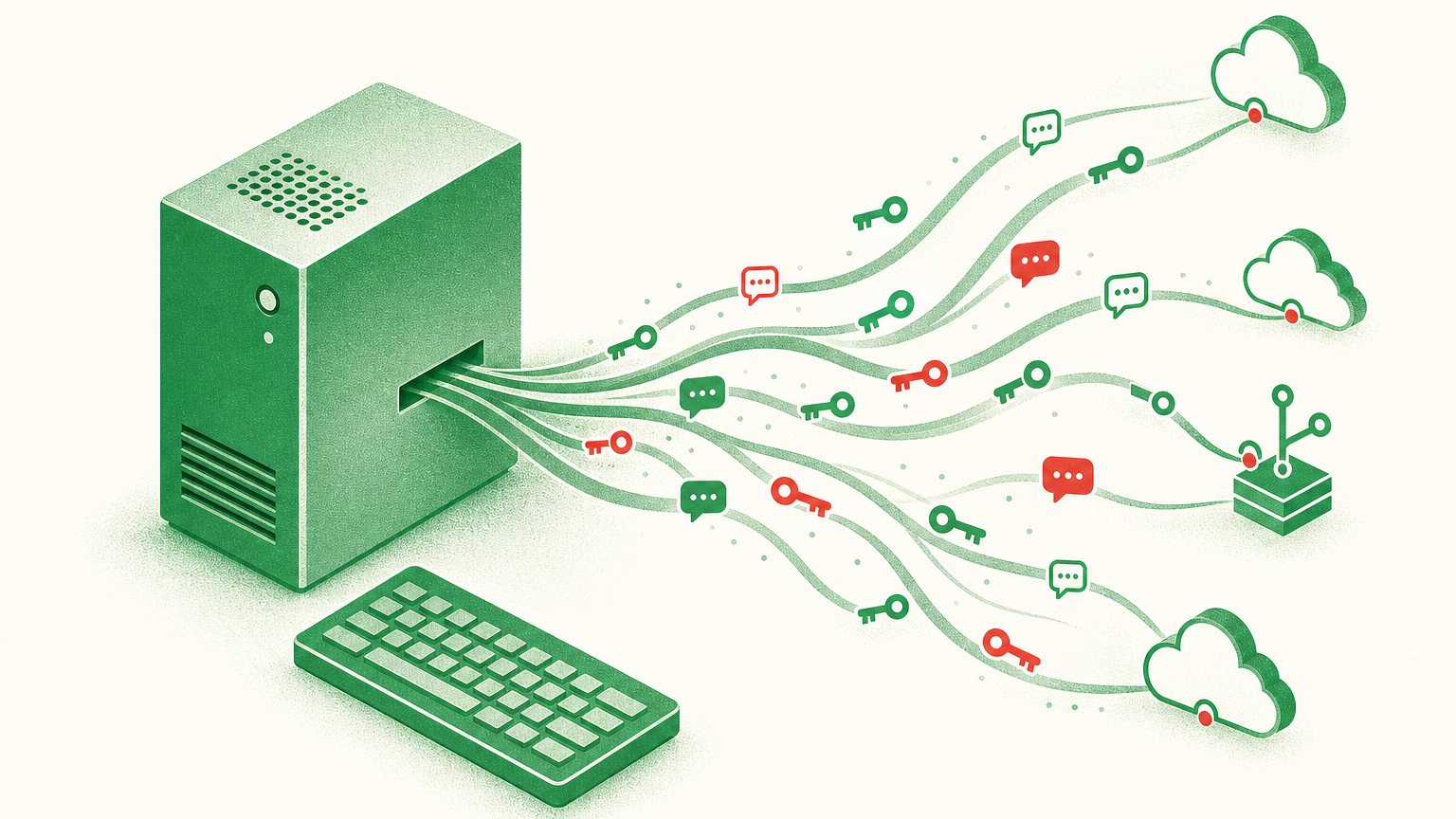
A newly reported information stealer dubbed “Aokigahara” is going after two high‑value caches most malware hasn’t prioritized: developer keyrings and AI assistant sessions. That combo means one infected machine could hand over source code access, cloud tokens, and the sensitive context stored in AI chats, according to Dark Reading.
What happened
Dark Reading reports that Aokigahara expands the classic infostealer playbook beyond browser password vaults. The malware is said to target developer keyrings—where API keys, cloud credentials, and CI/CD tokens often live—and AI assistant sessions, which can include persistent tokens and stored conversations tied to business workflows. The result is a broader set of loot from a single endpoint compromise than typical credentials‑only steals, per the outlet’s summary.
The focus on AI sessions is significant because tokens that power assistants often unlock connected tools or knowledge bases. If those tokens are lifted, attackers could replay access into systems the assistant can reach. Organizations that wire assistants into ticketing, code repos, or docs risk exposure that stretches beyond email or browser‑stored passwords, Dark Reading notes.
Aokigahara’s interest in developer keyrings raises stakes for dev and ops teams. Keyrings commonly hold credentials for source control, artifact registries, or cloud providers. Losing even one powerful token can grant pull or push access to code and pipelines—amplifying risk from one compromised workstation into production‑adjacent systems, according to the report’s framing.
Email programs are in the blast radius because many critical tokens move through or are protected by identities mediated via mail. A stealer that follows a phishing delivery could grab not only mailbox access, but also the developer and AI tokens tied to that user on the same host, Dark Reading’s account implies.
The background
Information stealers typically hunt browser passwords, cookies, and autofill data. Dark Reading’s summary suggests Aokigahara adds two modern targets: developer key stores and AI assistant sessions. That evolution tracks with the way organizations now work—dev tools and AI agents hold powerful keys that outlive a browser login and often aren’t protected by the same user prompts.
AI assistants frequently cache session state and tokens. Those can include scopes for reading or writing into enterprise systems like wikis, ticketing, or chat. If a malware author grabs that state, it can be replayed without tripping traditional multi‑factor prompts—mirroring trends we’ve covered where adversaries go after session tokens rather than raw passwords in Microsoft 365 or Google accounts. For a primer on how attackers chase tokens and sessions, see our coverage of token replay in Microsoft 365 tenants and the rise of AI‑made login clones that capture sessions.
On the developer side, keyrings aggregate secrets for convenience. That convenience can become a liability if malware can enumerate and exfiltrate the store. Stealers that add support for Git, cloud CLIs, or package managers can turn a user’s workstation into a staging point for broader supply‑chain impact—echoing recent concerns about trojanized releases and credential theft in open‑source ecosystems like the LiteLLM package incident.
The move to target AI assistants parallels a separate security theme: email‑originated prompt injection and agent abuse. While Aokigahara is about theft, not persuasion, the net effect overlaps—AI sessions are a high‑value, low‑friction access path. We’ve previously detailed how attackers bait AI email assistants with hidden instructions, and why tokens plus context are attractive loot.
What people are saying
Dark Reading’s piece frames the stealer’s aim as exposing “a forest of AI sessions, sensitive business data, and developer infrastructure from a single compromised endpoint.” That choice of targets suggests malware authors are following where automation and knowledge concentrate—places where one token controls many downstream actions.
Security teams reading this will likely infer a few priorities from Dark Reading’s reporting. First, developer key hygiene needs to look more like production secret management—short lifetimes, narrow scopes, and clear ownership. Second, AI assistant tokens should be treated as privileged credentials; they deserve the same rotation, segregation, and monitoring as any service account.
Vendors in email and identity security have already been pivoting toward session‑aware defenses because attackers go after tokens to sidestep MFA. The same thinking applies here. Controls that detect unusual token use—from new devices, locations, or at odd times—can blunt replay even when a keyring or AI session has been stolen. That mirrors broader defensive shifts tied to token replay in cloud suites highlighted in our reporting on device‑code phishing.
Developers and platform owners may also reassess where AI assistants are allowed to connect. If an assistant can read issues, pull requests, and documentation, that’s valuable—but it’s also a clear boundary to harden. Disabling write scopes by default and separating sandboxes from prod can cut off escalation paths if tokens leak, an approach consistent with how teams isolate build and deploy stages.
What happens next
The Dark Reading summary does not list indicators of compromise, families it borrows from, or confirmed delivery vectors. Expect follow‑on technical write‑ups to pin down exfiltration methods, storage targets Aokigahara supports, and whether it hunts specific developer tools or assistants by name. Those details will matter for detection engineering and response runbooks.
In the meantime, teams can prepare without waiting for an IOC feed. Inventory where developer credentials live on endpoints, and move long‑lived keys to managed secret stores where possible. For tokens that must remain client‑side, shorten lifetimes and tag them to business functions so a compromised key can be revoked without halting unrelated mail or build workflows.
For AI assistants, separate environments for experimentation from those tied to business data. Require device compliance for sessions that can access internal systems, and log every token grant and use with enough context to pivot investigations. If your assistant integrates with email triage or ticket intake, consider rate limits and human‑in‑the‑loop checks for actions that could move money, change customer data, or alter release pipelines.
Finally, revisit phishing controls with this expanded blast radius in mind. A stealer delivered through a single malicious message can now jeopardize code, cloud, and AI context. Coordinating email defenses with identity and endpoint telemetry helps catch the token‑replay behaviors that follow initial theft, particularly in Microsoft 365 and Google Workspace tenants referenced in our security category hub.
The Email Vox take
-
Make dev secrets ephemeral. Rotate API keys and tokens every 7–30 days, enforce least privilege, and tag them by function so you can revoke fast without breaking mail workflows.
-
Split AI assistant access from production. Use separate orgs or workspaces, disable tool integrations by default, and require device posture checks to fetch AI tokens. Watch for token use from new IPs or geos, and alert on prompts that request secrets or code signing keys.
-
Assume phishing is the dropper. Tighten attachment and link controls, block device‑code logins from unmanaged endpoints, and monitor for token replay across Microsoft 365 and Google Workspace. If one endpoint is hit, rotate developer and AI tokens immediately—don’t wait for proof of misuse.
Frequently asked questions
- what is the aokigahara stealer?
- Aokigahara is an information‑stealing malware that targets developer keyrings and AI assistant sessions to loot credentials, tokens, and business data from a compromised endpoint.
- how does aokigahara affect ai assistants?
- The stealer goes after AI assistant sessions, exposing stored conversations and tokens that can unlock sensitive business context or connected tools from one endpoint.
- why target developer keyrings?
- Developer keyrings often store API keys, cloud credentials, and tokens. Stealing them can open access to source code, CI/CD, and production infrastructure.
- is this just another password stealer?
- No. The reported focus expands beyond browser creds to developer keyrings and AI assistant tokens, widening the blast radius to apps and automation tied to those tools.
- what business risk does this create?
- One infected machine could expose AI chats, internal prompts, source code, and cloud access—letting attackers pivot through dev and data systems.
- how do attackers get aokigahara onto devices?
- The report doesn’t detail the delivery method. Many stealers spread via phishing, malvertising, or trojanized packages—controls should cover these common paths.
- what should security teams lock down first?
- Harden dev key storage, rotate and scope API keys, segregate AI assistant tokens, and watch for suspicious token use from new devices or regions.
- does this change email security priorities?
- Yes. Phishing that lands a stealer could expose AI and dev tokens, so email defenses and user training now guard far more than inboxes.
Why this matters
If a single phishing click can plant a stealer that vacuums developer keys and AI assistant tokens, the blast radius jumps from one inbox to entire workflows tied to code, cloud, and automation. Email teams, security engineers, and platform owners now share the same risk surface: a token hoard living on endpoints. The practical shift is to treat AI sessions and developer keyrings like production secrets—scoped, rotated, logged, and revocable—so one infected laptop doesn’t become the shortest path to your stack.
Sources
Reporting draws on the public sources listed above. Spotted an error? Request a correction.
Related coverage
Phish are now baiting your AI email assistant
Attackers are slipping hidden instructions into emails to steer AI assistants. Here’s how the trick works—and what to lock down before it bites.
15 Oct 2026
Fake invites, real theft: AitM phish steals Google MFA
Researchers say UAT‑11985 is phishing Taiwan research affiliates with fake invites and an AitM kit to grab Google logins and MFA codes.
17 Oct 2026

Proofpoint wants email defenses to read intent, not just signals
Announced at Protect 2026, Agentic Collaboration Security will connect email, inbox and browser defenses. The rollout is planned for Q1 2027.
14 Oct 2026

Cyber insurers are now asking for DMARC receipts
Insurers now expect SPF, DKIM, and DMARC—while EU rules push the same controls. Here’s how underwriting shifted, what it asks in 2026, and why enforcement helps.
20 Oct 2026
Google adds Gmail reply controls to Workspace Studio
Workspace Studio’s October update adds reply filtering, nested logic, document search and more meeting data—small controls that could make email workflows less repetitive.
10 Oct 2026

Lock down your email in 30 days, no drama
A 30‑day security-and-deliverability tune‑up built from fall 2026 headlines: MFA‑bypass phish, AI‑baited inbox tools, Gmail’s vanished colors, and sharper blocklists.
18 Oct 2026