Chainalysis says an intruder saw some customer identity data
The blockchain sleuth says an intruder hit internal tools and saw some customer identity data. No investigation content, passwords, or tokens were exposed, it says.

By Nora Vale· Email Vox · 3 Nov 2026

Key facts
- ■Chainalysis said an external actor accessed internal tools in Oct 2026.
- ■The company says only non‑sensitive customer identity data was exposed.
- ■No investigation content, passwords, or session tokens were accessed, per Chainalysis.
- ■Scope and exact datasets were not disclosed in the report.
- ■Identity‑only leaks can still fuel targeted phishing and BEC attempts.
Chainalysis says someone slipped into its internal tools this month and viewed some customer identity data. The blockchain analysis firm stressed what the intruder didn’t get: no investigation content, no authentication credentials, and no session tokens, according to the company’s disclosure reported by The Hacker News.
What happened
-
Chainalysis detected activity by an external actor in October 2026 and confirmed an intrusion into internal tools, the company told The Hacker News. It said the actor accessed non‑sensitive customer identity data.
-
The firm said the breach did not include any investigation content. That matters because Chainalysis’s core business involves sensitive blockchain‑tracking work for exchanges, enterprises, and public‑sector clients.
-
Chainalysis also said there was no unauthorized access to authentication credentials or session tokens. That reduces immediate account‑takeover risk stemming from this incident, by the company’s account.
-
While the company framed the exposed data as “non‑sensitive,” identity details—even basic ones—often enable precise targeting. Past dumps of names and contact details have quickly fueled tailored phishing runs at scale, as seen after the DHS employee list leak we covered in a recent story on 41,000+ DHS records.
-
The disclosure did not cite ransomware, extortion, or disruptive impact on operations. The description focused on limited data exposure via internal tools and on what attackers did not reach.
-
The company described the detection as occurring “this month,” placing it in October 2026, but did not provide an exact date in the reporting cited by The Hacker News.
-
Details on the specific internal tool, the attacker’s entry point, and the volume of customer records exposed were not provided in the coverage. That leaves open questions about scope and any third‑party dependencies.
The background
-
Chainalysis is described as an American blockchain analysis firm in the source report. Its products are widely used by crypto exchanges, compliance teams, and investigators, which makes any customer‑identity data potentially valuable to phishers who impersonate vendors and partners.
-
Identity‑only leaks routinely translate into inbox risk. After Capcom disclosed exposure of 11.7 million email addresses, we flagged the surge potential for targeted lures in our piece on the Capcom breach and follow‑on phishing risk.
-
Criminals also pivot quickly when infrastructure shifts. Even when law enforcement seizes abusive hosting, operations can reappear elsewhere, as noted in our coverage of the Virtualine takedown and bulletproof hosts. That agility matters if exposed identity data starts circulating.
-
Email compromises increasingly hinge on session and token tricks, not only passwords, as shown in our report on Huntress tracking Microsoft 365 token‑replay at 79 orgs. Chainalysis’s statement that no session tokens were touched narrows one attack avenue tied to this incident.
-
Headlines themselves drive clicks. When a recognizable vendor confirms an incident, scammers copy the brand tone and send “account verification” or “urgent billing” lures. We’ve published a playbook for when breach noise rises: see our guidance to harden deliverability during security headline spikes.
-
For senders, the near‑term risk is not just inbound phish to staff. Customers and subscribers may also see lookalike mail claiming to be from partners named in breach coverage, putting your outbound reputation at stake if your domain can be spoofed.
What people are saying
-
Chainalysis told The Hacker News that an external actor accessed non‑sensitive customer identity data via internal tools, and emphasized that investigation content, authentication credentials, and session tokens were not accessed. The company’s framing suggests limited scope centered on identity data exposure.
-
The disclosure did not list specific datasets or numbers. Without that detail, customers are left to assess precautionary steps based on the assurance that logins and tokens were not touched.
-
Security teams reading this kind of statement typically increase monitoring for brand‑themed phishing and business email compromise (BEC) pretexts. Expect lures that reference compliance checks, KYC refreshes, or “crypto wallet safety” steps, even if Chainalysis itself is not sending such requests.
-
Email defenders often tighten authentication and detection after adjacent breaches. Enforcing Domain‑based Message Authentication, Reporting and Conformance (DMARC) at p=reject alongside Sender Policy Framework (SPF) and DomainKeys Identified Mail (DKIM) is a proven way to block domain spoofing that mimics your brand while incident chatter is high.
-
We also see security teams tune detections for device‑code phish and token replay—tactics that bypass passwords and sometimes multifactor prompts—because attackers reuse successful playbooks across vendors. Our pieces on device‑code phishing campaigns and AI‑assisted session theft outline those moves.
-
Communications teams usually pre‑draft advisories in case customers report suspicious messages referencing the incident. Clear guidance—"we will not ask for passwords or seed phrases via email"—helps reduce support load and keeps your deliverability intact.
What happens next
-
Chainalysis’s statement, as reported, focused on what was and wasn’t accessed and did not detail follow‑up steps. Companies in this position typically continue investigating, notify impacted customers, and harden access to internal tools that were abused.
-
Customers should assume phishing attempts will reference the news and may name real contacts if identity data included names or roles. Training and just‑in‑time banners can cut click‑through on urgent‑sounding “verification” or “KYC” requests.
-
If your organization interacts with Chainalysis or similar vendors, add temporary detections for brand keywords and domains that commonly appear in vendor impersonation runs. Monitor for lookalike registrations and consider inbound DMARC verification to flag spoofed vendor mail.
-
Keep an eye on your own sender reputation while security alerts circulate. Incident‑themed campaigns can spike complaint rates if subscribers confuse real notices with scams. Align copy, cadence, and authentication so mailbox providers can distinguish your legitimate traffic during the noise.
-
Finally, document any attempted lures your team receives that mention this incident. Patterns in subject lines, sending infrastructure, and reply‑to paths can inform blocks without over‑filtering legitimate correspondence.
For more on securing the inbox while staying deliverable, browse our security coverage at the Email Vox security hub.
The Email Vox take
-
Treat this as fresh phish fuel. Add temporary rules to quarantine messages claiming urgent Chainalysis or compliance actions. Watch for lookalikes in display names and domains.
-
Brief teams and VIPs. Share examples of past lures after similar breaches, like the DHS data dump and Capcom email leak, and require re‑verification for any payment or wallet‑related change requests.
-
Strengthen DMARC and detection. Enforce SPF, DKIM and DMARC at p=reject for your domains, monitor blocklists, and tune detections for vendor‑themed BEC and device‑code phish while headlines drive curiosity clicks.
Frequently asked questions
- what did chainalysis say was accessed in the breach?
- The company said an external actor accessed non‑sensitive customer identity data via internal tools. No investigation content, authentication credentials, or session tokens were touched.
- did the attackers get chainalysis login passwords or tokens?
- No. Chainalysis said there was no unauthorized access to authentication credentials or session tokens.
- was chainalysis’s investigation data exposed?
- No. Chainalysis stated its investigation content was not accessed during the incident.
- when did chainalysis detect the incident?
- Chainalysis said it detected the activity this month, in October 2026.
- is this confirmed as a ransomware incident?
- The company did not describe ransomware. It said an external actor accessed non‑sensitive customer data and that core investigative content and credentials were not affected.
- what risks does exposed identity data create for customers?
- Even limited identity data can fuel targeted phishing and social‑engineering attempts aimed at Chainalysis customers and their vendors.
- is chainalysis telling customers to reset passwords?
- Chainalysis said no credentials or session tokens were accessed, so it did not attribute any need for mass password resets to this incident.
- who reported the breach details?
- Chainalysis disclosed the incident; coverage was reported by The Hacker News. Source: https://thehackernews.com/2026/10/chainalysis-confirms-intrusion-into.html
Why this matters
Even when a company says only “non‑sensitive” identity data was touched, attackers can turn that sliver into convincing lures. Inboxes feel the blast radius first. For email teams, this is a reminder that vendor‑themed phishing spikes after high‑profile incidents, and that protecting subscribers and staff depends on more than spam filters. Harden authentication, tune detections for brand impersonation, and brief humans who approve money or data changes. A measured response preserves deliverability while cutting off the most lucrative social‑engineering angles.
Sources
Reporting draws on the public sources listed above. Spotted an error? Request a correction.
Related coverage

Hacker posts 41,000+ DHS employee records. Okta disputes link
A searchable dump names tens of thousands at CBP, ICE, HSI and more. The hacker says Okta SSO; Okta says it wasn’t breached. Email risk: targeted lures.
31 Oct 2026
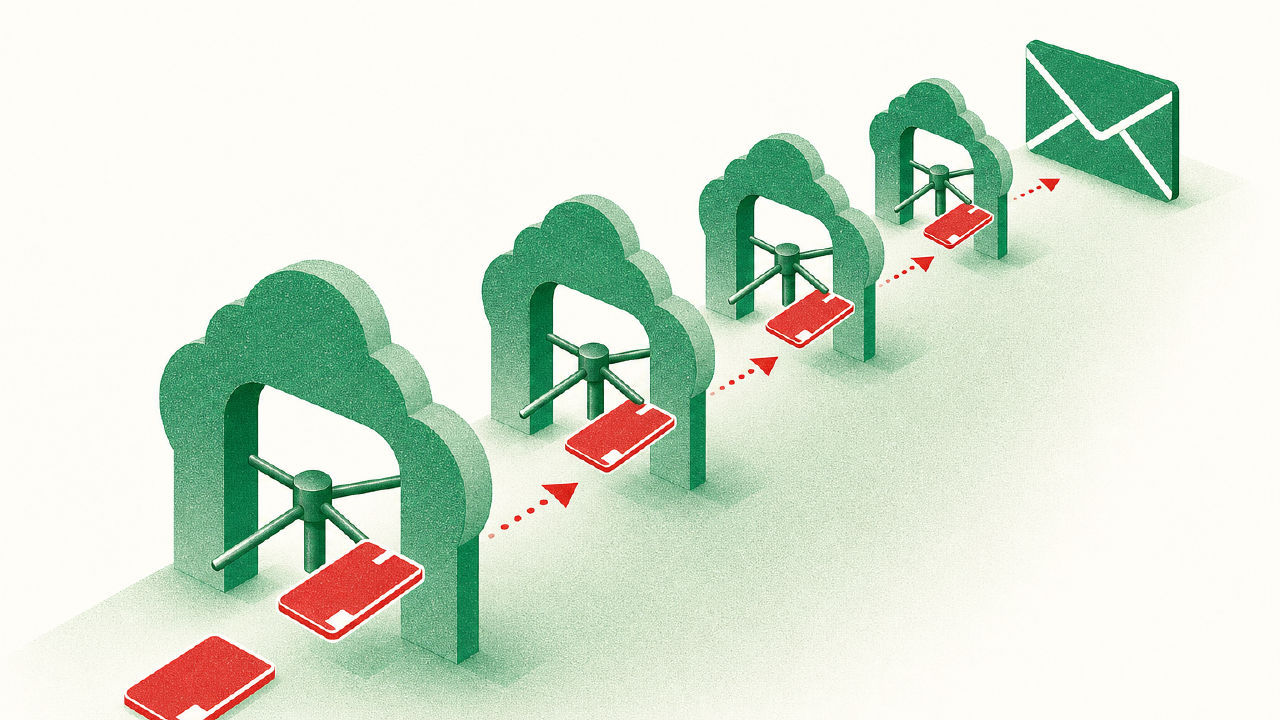
Huntress: Microsoft 365 token replay hit 79 orgs
Huntress tracked an AitM token‑replay spree from mid‑July to late September that slipped into dozens of Microsoft 365 tenants without re‑prompting MFA.
27 Oct 2026
Skyw4lker leans on device codes to phish U.S. orgs
ANY.RUN flags “Skyw4lker” using device code phishing to slip into U.S. corporate accounts by piggybacking on trusted cloud sign-ins.
29 Oct 2026

AI pen-test tool fuels massive hacks for $12
Researchers say a Chinese-speaking crew used the Cairn AI pen-test tool to loot hundreds of sites, while another campaign grabbed domain control for $12.
24 Oct 2026
Researchers say Microsoft tech support scam rode a Russian TDS
Researchers say a Russian-run TDS and thousands of Cloudflare links helped a Microsoft impersonation scam route victims at scale.
21 Oct 2026

North Korea’s Kimsuky is email‑pitching Ukraine’s experts
A South Korean firm says Kimsuky used credible invites and research asks to pry into Ukraine’s war intel, then shifted to payloads hosted on developer platforms.
15 Oct 2026