Hacker posts 41,000+ DHS employee records. Okta disputes link
A searchable dump names tens of thousands at CBP, ICE, HSI and more. The hacker says Okta SSO; Okta says it wasn’t breached. Email risk: targeted lures.

By Iris Calder· Email Vox · 31 Oct 2026

Key facts
- ■Hacker ‘Department of Peace’ leaked 41,000+ DHS employee records online.
- ■Most entries list CBP, ICE, and HSI staff; about 1,000 CISA employees appear too.
- ■Leaked fields include work emails, phones, titles, offices, and per‑account access to apps.
- ■Hacker claims an Okta SSO source; Okta denies any compromise of its systems.
- ■DHS says it’s addressing a potential breach and will update the public when possible.
- ■DDoSecrets labels the dataset ‘Icepick’ and says it identifies officials in sensitive operations.
A hacker just posted a searchable trove of more than 41,000 US Department of Homeland Security (DHS) employee records. It lists names, work emails, job titles, phone numbers, and offices—and, critically, which internal systems each person can access, SecurityWeek reports.
The actor, using the handle “Department of Peace,” claims the data came from an Okta single sign-on (SSO) system used by DHS employees and contractors to reach a central environment. Okta told SecurityWeek, “Okta is secure, and we have no evidence our data or systems were compromised.”
What happened
SecurityWeek says the leaked dataset includes records tied mostly to US Customs and Border Protection (CBP), Immigration and Customs Enforcement (ICE), and Homeland Security Investigations (HSI), with roughly 1,000 Cybersecurity and Infrastructure Security Agency (CISA) employees also listed.
The posted fields go beyond contact details, exposing job roles and granular records of which internal applications and systems each account can access, a sensitive map that can guide targeted intrusion attempts.
An online search tool has been stood up to query the leak, effectively turning an internal directory into a public lookup that attackers can mine for spearphishing and social engineering targets by role and office.
Distributed Denial of Secrets says it obtained a copy and has labeled the dataset “Icepick,” asserting that it identifies officials tied to covert and undercover operations, as well as personnel in rendition and deportation programs.
Illumio public sector CTO Gary Barlet warned that paired contact and access info can function like a breach roadmap, saying, “If an attacker knows which employees have access to which systems and applications, they’ve essentially been handed a roadmap for where to go next and who to target to get there.”
DHS told SecurityWeek it’s aware of a potential breach and is working to address it “swiftly and effectively,” adding that it takes threats against employees and officers seriously and will update the public as more information becomes available.
The hacker framed the leak as payback for government data collection, writing, “They have our information, so it’s only fair that we have theirs,” positioning the dump as a retaliatory disclosure rather than a ransom ploy.
The claimed source is an Okta SSO instance, according to the hacker’s note, but Okta’s statement to SecurityWeek rejects that link, leaving the exact path of compromise unresolved pending further investigation.
The background
The incident surfaced a month after the ShinyHunters extortion group breached FBI systems and three months after the Homeland Security Information Network (HSIN) was hacked, per SecurityWeek’s timeline context.
Because the leak lists work email addresses and phones alongside roles, it lowers the effort needed to craft convincing lures aimed at staff with access to high‑value systems, a classic prelude to credential theft or session hijacking.
Attackers increasingly skip passwords and go after tokens and trusted flows; our coverage of device‑code phishing against U.S. orgs shows how adversaries piggyback on legitimate sign‑ins to reach cloud accounts without re‑prompting for MFA.
Token replay campaigns have also scaled quickly; Huntress tracked Microsoft 365 token replay across dozens of tenants, illustrating how one weak link can be multiplied once the right target is identified.
Criminals are also upping the realism of phishing pages; as we reported, AI‑made login clones can capture multi‑factor prompts and active sessions, making any high‑fidelity directory a springboard for more precise—and successful—impersonation.
For the email world, high‑profile government leaks often ripple into stricter filtering and nervous recipients; we’ve outlined how to keep deliverability stable when security headlines spike so legitimate mail doesn’t get caught in the dragnet.
If the dataset’s access mappings are accurate, they can expose which teams to impersonate for internal approvals, which applications to spoof in alerts, and which help‑desk workflows to test—consequences that extend well beyond inboxes into identity and support processes.
What people are saying
DHS said it’s addressing the situation and will protect impacted employees and officers, signaling operational steps are underway while details of the intrusion vector remain undisclosed.
Okta’s spokesperson told SecurityWeek that the company is secure and found no evidence of a compromise, a position that directly contradicts the hacker’s claim of an Okta SSO origin.
Distributed Denial of Secrets characterizes the “Icepick” trove as identifying personnel involved in sensitive operations, raising concerns about targeted harassment or coercion alongside cyber risks.
Illumio’s Gary Barlet emphasized that the access metadata heightens danger by pinpointing who to phish first and which internal systems to chase, sharpening the likely focus for attackers.
The hacker’s justification—“They have our information, so it’s only fair that we have theirs”—frames the leak as retaliatory exposure, which can complicate attribution and intent assessment for defenders.
What happens next
DHS says it will update the public as the investigation progresses, but for now, the presence of a live search tool means affected addresses and roles are already in circulation.
Organizations that interact with DHS staff should expect a rise in tailored phishing attempts, spoofed internal alerts, and help‑desk social engineering shaped by leaked role and access details.
Security teams can preempt some fallout by tightening MFA prompts, watching for suspicious consent grants, and alerting on new inbox rules—controls that blunt social‑engineering‑led account takeovers.
Senders should also brace for more cautious filtering downstream; keeping SPF, DKIM, and DMARC clean and consistent can help legitimate outreach avoid false positives as security postures harden across the security landscape.
The Email Vox take
-
Treat this as a targeting blueprint against public-sector inboxes. Lock down people most listed in the leak: enable number-matching MFA, enforce phishing-resistant auth where possible, and monitor for consent grants and new inbox rules.
-
Expect smarter lures. Train for real-world tricks like device-code phishing, token replay, and AI-cloned login pages. Triage risky senders, quarantine links, and flag mismatched domains.
-
Keep delivery steady during security noise. Follow our fast playbook to harden deliverability when headlines spike: patch first, rotate secrets, verify DKIM, and keep authentication clean to avoid false positives.
Frequently asked questions
- what data was leaked from dhs employees?
- Names, work email addresses, phone numbers, job titles, office locations, and details showing which systems and internal apps each account can access.
- how many dhs records were exposed?
- More than 41,000 employee records, according to the hacker who posted the database online.
- which dhs components were most affected?
- Most records reportedly involve CBP, ICE, and HSI; roughly 1,000 CISA employees were also listed, along with personnel from other DHS agencies.
- did the leak come from okta?
- The hacker claims the data was stolen from an Okta single sign‑on system, but Okta said it’s secure and found no evidence its systems were compromised.
- what is ‘icepick’ in this context?
- Distributed Denial of Secrets obtained the database and calls it ‘Icepick,’ saying it identifies officials tied to covert operations and deportation programs.
- is there a tool to search the leaked data?
- Yes. An online search tool for the leaked directory has been made available, according to SecurityWeek’s reporting.
- what risks does this pose for email security?
- Public work emails and access mappings can supercharge spearphishing and social engineering by showing who to target and which systems they can reach.
- what has dhs said about the incident?
- DHS said it’s aware of a potential breach, is working to address it swiftly and effectively, and will update the public when more information is available.
Why this matters
Why this matters This leak turns a government directory into an attacker’s playbook. Work emails, roles, office locations, and access maps don’t just enable cold calls—they sharpen spearphishing, business email compromise, and insider‑style pretexts. Even if Okta isn’t the breach source, the exposure narrows who to impersonate and which systems to chase. For senders, it means more convincing messages hitting inboxes and more pressure on authentication, anomaly detection, and human workflows. For defenders, it’s a reminder that identity metadata—who has access to what—can be as sensitive as credentials themselves.
Sources
Reporting draws on the public sources listed above. Spotted an error? Request a correction.
Related coverage
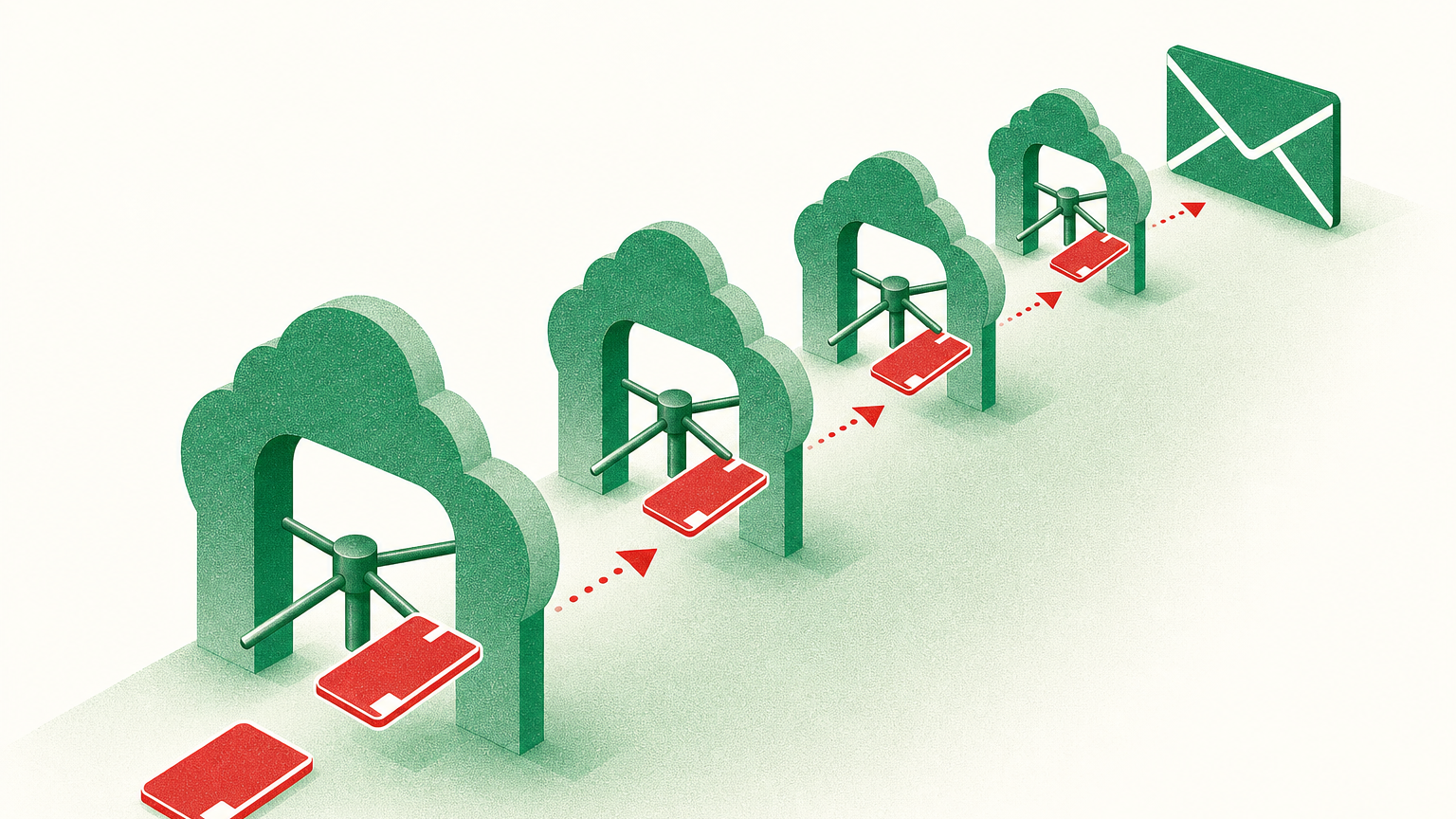
Huntress: Microsoft 365 token replay hit 79 orgs
Huntress tracked an AitM token‑replay spree from mid‑July to late September that slipped into dozens of Microsoft 365 tenants without re‑prompting MFA.
27 Oct 2026
Skyw4lker leans on device codes to phish U.S. orgs
ANY.RUN flags “Skyw4lker” using device code phishing to slip into U.S. corporate accounts by piggybacking on trusted cloud sign-ins.
29 Oct 2026

Researchers say Microsoft tech support scam rode a Russian TDS
Researchers say a Russian-run TDS and thousands of Cloudflare links helped a Microsoft impersonation scam route victims at scale.
21 Oct 2026

Capcom breach exposes 11.7m emails. Phishing risk follows.
Capcom says attackers grabbed 11.7 million email addresses from CAPCOM ID, changed 196 passwords, and peeked at limited personal data for 43 people.
24 Oct 2026

North Korea’s Kimsuky is email‑pitching Ukraine’s experts
A South Korean firm says Kimsuky used credible invites and research asks to pry into Ukraine’s war intel, then shifted to payloads hosted on developer platforms.
15 Oct 2026

AI pen-test tool fuels massive hacks for $12
Researchers say a Chinese-speaking crew used the Cairn AI pen-test tool to loot hundreds of sites, while another campaign grabbed domain control for $12.
24 Oct 2026