Passkeys won’t save you from bad recovery
Passkeys kill off password phish. The catch: attackers will just walk around them—through recovery, weak enrollments, and hijacked sessions—unless you keep checking trust.

By Felix Hart· Email Vox · 2 Nov 2026
Key facts
- ■SecurityWeek says passkeys block phishing and credential reuse by using public‑key cryptography bound to the real service.
- ■The column warns identity risk persists at enrollment, recovery, device changes, and during authenticated sessions.
- ■Fallback recovery via SMS, email links, passwords, or help desks can let attackers route around passkeys.
- ■Continuous identity threat detection should weigh device, behavior, network intel, account changes, and transaction context.
- ■A risk‑based model minimizes friction by escalating only when trust signals change or sensitive actions occur.
- ■As passwords vanish, attackers will shift to processes around authentication rather than the authenticator itself.
Passkeys promise the thing security people have begged for since forever: no passwords to phish, steal, or reuse. That’s a big win. But a new expert column points out that a perfect login still isn’t proof you should trust what happens next.
In a SecurityWeek column, Dr. Torsten George writes that passkeys “are better than passwords,” but they don’t erase identity risk across enrollment, recovery, device changes, and sessions (SecurityWeek). His take: strengthen authentication, then keep checking whether the identity is still worthy of trust.
What happened
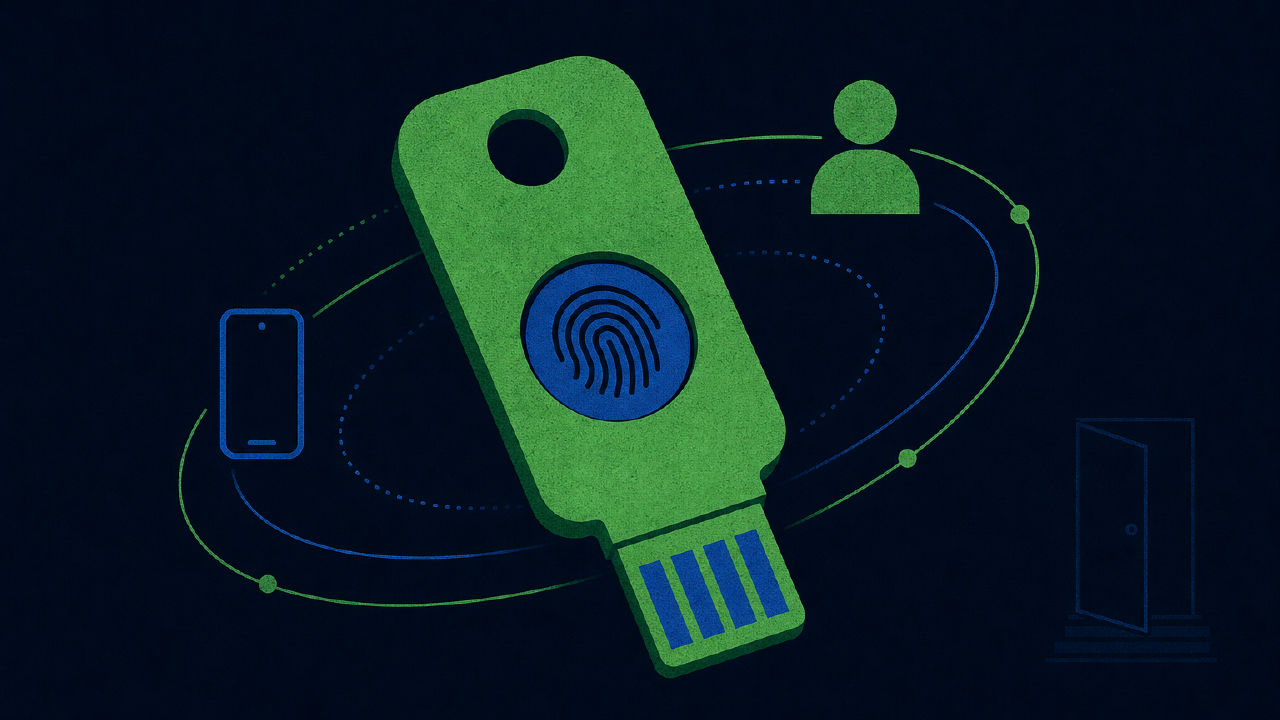
The column explains passkeys replace shared secrets with public‑key cryptography: a private key stays on the user’s device while the service holds a public key (SecurityWeek). Because the private key never leaves the device, there’s nothing reusable to intercept or replay.
It says properly implemented passkeys are bound to the legitimate service, which makes them resistant to phishing and adversary‑in‑the‑middle kits that harvest logins and codes (SecurityWeek). That’s a material lift over passwords plus one‑time codes, SMS, or push prompts.
The author argues the improvement doesn’t answer a harder question: after a successful login, should the system still trust the identity? If the account itself was seeded by an attacker, tight authentication only locks in the wrong owner (SecurityWeek).
He highlights enrollment integrity as a first failure point. If a bad actor creates or takes over an account before a passkey is bound, all subsequent authentications will be secure—and misattributed to the attacker (SecurityWeek).
Device churn is flagged as a second weak spot. People lose phones, replace laptops, and switch ecosystems, so organizations must handle users who show up without the expected passkey (SecurityWeek). That shifts the problem from login to recovery and re‑establishing trust.
The recovery path often reintroduces old weaknesses. If fallback uses passwords, SMS codes, email links, knowledge‑based questions, or help‑desk steps, attackers target the easier path around the passkey (SecurityWeek). The authenticator isn’t broken—the process is.
Session trust is the third gap. Many architectures still follow authenticate‑grant‑trust, but attackers can hijack sessions, abuse privileges, or quietly tweak account attributes after login, the column notes (SecurityWeek). In those cases, the login worked as designed while the identity trust decays.
The proposed fix is identity threat detection layered on top of passkeys. Instead of trusting indefinitely, systems should continuously evaluate risk using device characteristics, identity attributes, behavioral anomalies, network intelligence, account change events, transaction context, and threat indicators (SecurityWeek).
A risk‑based model is emphasized as the practical way to do this. Known users on known devices behaving normally proceed without added friction, while unfamiliar devices, sensitive account changes, or anomalous activity trigger additional verification only when needed (SecurityWeek).
Finally, the author warns that as organizations eliminate passwords, attackers will adapt. The target shifts from the authenticator to the processes around it—enrollment, recovery, session integrity, and high‑risk actions—because that’s where the new leverage lives (SecurityWeek).
The background
Passwords remain a top failure because people forget, reuse, and surrender them; attackers also automate credential stuffing and tune social engineering with AI, the piece notes (SecurityWeek). Passkeys directly reduce those credential‑theft and reuse risks.
Traditional multi‑factor add‑ons don’t fully help. One‑time passcodes, SMS, and push prompts can be phished, SIM‑swapped, or abused with MFA fatigue, according to the column (SecurityWeek). That’s why binding authentication to the real origin is a leap forward.
Usability is a real upside. With passkeys, users don’t memorize complex passwords or fetch transient codes repeatedly, which the column says organizations should welcome as a net gain for both security and experience (SecurityWeek).
Recovery is where old habits return. The author points out that help‑desk procedures, knowledge questions, and email links often survive the passkey rollout and become the new primary attack paths (SecurityWeek). That’s the choke point to redesign.
Continuous verification reframes identity from a moment to a lifecycle. The piece recommends monitoring device health, network context, and account changes so trust can be raised, maintained, or revoked as conditions shift (SecurityWeek). That’s a closer fit to how attacks actually unfold.
Related attacks reinforce the need to watch after login. Our earlier coverage of AI‑made login clones and token replay in Microsoft 365 shows how criminals pivot to sessions and tokens once they pass the front door. For more on defensive basics, see our authentication hub.
What people are saying
Dr. Torsten George sums up the core risk plainly: “Authentication is not identity” (SecurityWeek). His argument is that cryptographic proof of a login doesn’t prove the account owner remains trustworthy.
He also cautions that “the stronger the authenticator becomes, the more important the integrity of enrollment becomes,” because attackers will work upstream to seed accounts before strong authenticators are bound (SecurityWeek).
On operations, he advocates a risk model that “does not require adding friction to every interaction,” reserving extra checks for unusual devices, sensitive changes, or anomalous behavior while letting normal work flow uninterrupted (SecurityWeek).
For email and collaboration admins, that framing aligns with our reporting on how attackers lean on help‑desk persuasion and device‑code flows to sidestep MFA—see our notes on help‑desk social engineering and device‑code abuse campaigns like Skyw4lker’s phishing. The shared theme: process beats prompts.
What happens next
If you’re rolling out passkeys, the column implies you’ll need a parallel track to harden three things: enrollment proofing, recovery evidence, and post‑login risk checks (SecurityWeek). That’s how you stop attacks from routing around authentication.
Design recovery as if it will be attacked first. Replace knowledge questions and SMS resets with verifiable signals and documented workflows that can’t be socially engineered as easily, the author suggests by warning about weak fallbacks (SecurityWeek).
Map sensitive identity actions—adding a new device, changing account attributes, or initiating high‑risk transactions—to adaptive checks. The piece lists device traits, behavior, network intel, and threat indicators as inputs that decide when to step up verification (SecurityWeek).
Expect attacker adaptation as passwords fade. The author’s forecast is straightforward: passkeys succeed by shrinking one attack surface, so adversaries will push on the edges—enrollment fraud, recovery abuse, session hijack, and anomalous actions—to get the same outcomes by other means (SecurityWeek).
For email teams, that translates to watching the moves that matter: forwarding rules, reply‑to changes, mailbox delegations, and bulk data pulls after an otherwise clean login. Our earlier guidance on hardening deliverability during security spikes explains how to add guardrails without hurting inbox placement.
The Email Vox take
-
Treat passkeys as your “no phish, no reuse” layer—not the finish line. Tie new device enrollment and recovery to stronger evidence than SMS or email links, and log who approved what, when.
-
Add continuous checks around post‑login email tasks: changing reply‑to domains, rotating API keys, tweaking routing rules, or exporting contacts. Use device reputation and behavior to decide when to re‑verify. If trust drops, pause the action—not just the session.
-
For marketing and product sign‑ins, document recovery playbooks that don’t rely on help‑desk persuasion. Make proofing steps explicit, auditable, and repeatable across your org.
Frequently asked questions
- what are passkeys and how are they different from passwords?
- Passkeys use public‑key cryptography, storing a private key on the user’s device and a public key on the service. There’s no reusable secret to phish, steal, or reuse.
- are passkeys phishing‑resistant?
- Yes. Properly implemented passkeys bind authentication to the legitimate service, blocking adversary‑in‑the‑middle and credential‑theft attacks built around passwords.
- do passkeys solve identity risk by themselves?
- No. The column argues passkeys strengthen authentication, but identity trust can still fail at enrollment, recovery, device changes, or during a hijacked session.
- what happens if a user loses the device holding their passkey?
- Recovery becomes the weak spot. If fallback uses passwords, SMS, email links, knowledge questions, or help desks, attackers may exploit that path instead.
- why does enrollment matter with passkeys?
- If an attacker creates or takes over an account before a passkey is bound, the system may securely authenticate the wrong person thereafter.
- what is identity threat detection?
- It’s continuous risk evaluation after login using device traits, behavior, network intel, account changes, transaction context, and threat indicators to decide if trust still holds.
- does continuous identity checks always add friction?
- No. The author promotes a risk‑based model: let known, normal activity pass; escalate verification only when risk changes.
- will attackers move around passkeys instead of through them?
- Yes. The piece says as passwords vanish, attackers will target enrollment, recovery, sessions, and anomalies rather than the authenticator itself.
Why this matters
Email runs on identity: who sent, who logged in, who changed a setting. Passkeys remove a huge phishing and credential‑reuse problem, but the high‑value moves happen after login. If enrollment, recovery, and session trust stay weak, attackers will reroute around the authenticator and still change domains, forward mail, or drain data. Continuous identity checks give email teams a way to allow normal work while catching off‑path device changes, odd account tweaks, or export spikes—protecting both deliverability and security without sandbagging users.
Sources
Reporting draws on the public sources listed above. Spotted an error? Request a correction.
Related coverage
AI pen-test tool fuels massive hacks for $12
Researchers say a Chinese-speaking crew used the Cairn AI pen-test tool to loot hundreds of sites, while another campaign grabbed domain control for $12.
24 Oct 2026

Researchers say Microsoft tech support scam rode a Russian TDS
Researchers say a Russian-run TDS and thousands of Cloudflare links helped a Microsoft impersonation scam route victims at scale.
21 Oct 2026
Phish are now baiting your AI email assistant
Attackers are slipping hidden instructions into emails to steer AI assistants. Here’s how the trick works—and what to lock down before it bites.
15 Oct 2026

Cyber insurers are now asking for DMARC receipts
Insurers now expect SPF, DKIM, and DMARC—while EU rules push the same controls. Here’s how underwriting shifted, what it asks in 2026, and why enforcement helps.
20 Oct 2026

Lock down your email in 30 days, no drama
A 30‑day security-and-deliverability tune‑up built from fall 2026 headlines: MFA‑bypass phish, AI‑baited inbox tools, Gmail’s vanished colors, and sharper blocklists.
18 Oct 2026
Phishing takedown targets the cloud accounts behind the scams
A coalition disrupted infrastructure linked to more than a billion malicious messages, exposing how phishing services turn legitimate cloud tools into attack machinery.
9 Oct 2026